
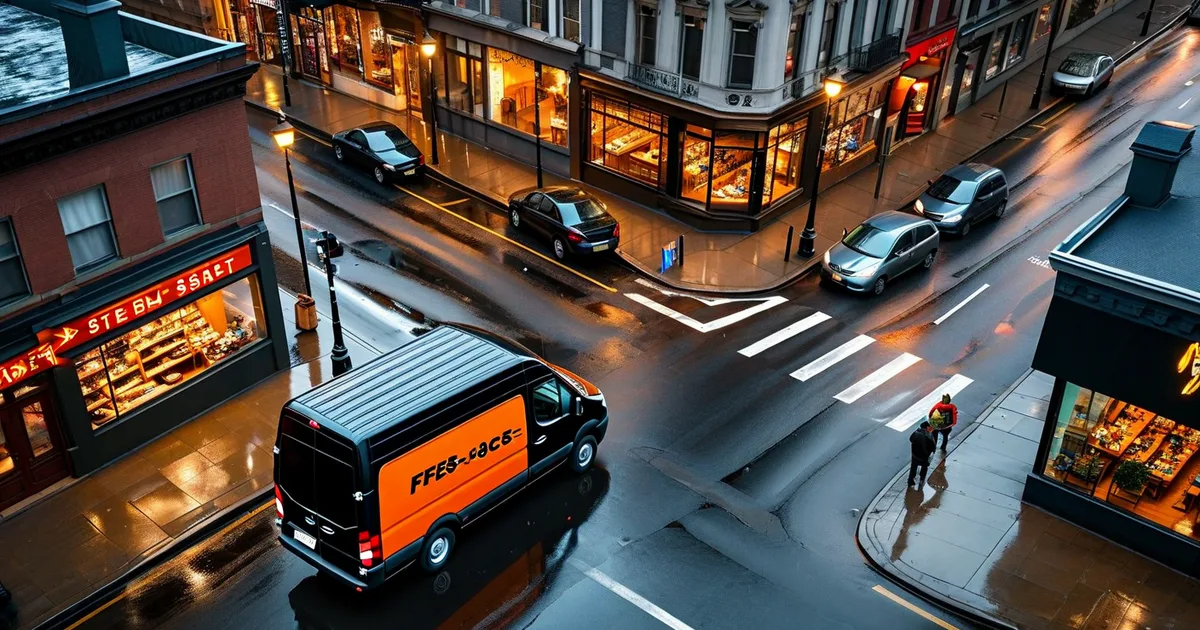
Why Business Signage Still Matters in a Digital World
In an era dominated by social media ads, Google rankings, and email campaigns, it might seem odd to talk about physical signs. But here’s the reality: 76% of consumers have entered a store or business they had never visited before based solely on its signage, according to a FedEx Office survey. The International Sign Association reports that on-premise signage delivers more impressions per dollar than almost any other advertising medium.
Business signage is not a relic—it’s a cornerstone of brand identity. From the logo on your office door to a full vehicle wrap cruising a highway, every physical touchpoint tells your audience who you are, what you do, and whether you’re worth their trust.
This guide covers the full spectrum of business signage—types, materials, costs, design principles, and ROI—so you can make informed decisions that elevate your brand.
The Full Spectrum of Business Signage
Before diving into specifics, let’s map out the landscape. Business signage isn’t a single product; it’s an ecosystem of visual communications spread across multiple environments.
Indoor Signage
Indoor signage shapes how clients, partners, and employees perceive your company the moment they step inside.
- Reception and lobby signs – Often 3D lettering in acrylic, brushed aluminum, or backlit channels. These set the tone for every visitor interaction.
- Wayfinding and directional signs – Essential in large offices, co-working spaces, and multi-floor buildings. ADA-compliant options include Braille and tactile elements.
- Wall graphics and murals – Brand values, mission statements, or culture-driven artwork printed on adhesive vinyl or directly onto walls.
- Safety and compliance signs – Fire exits, first-aid locations, and health protocols. Often overlooked in branding, yet they can (and should) carry your visual identity.
Outdoor Signage
Outdoor signage is your 24/7 salesperson—always visible, always working.
- Storefront and façade signs – Channel letters, lightbox signs, blade signs, and awning graphics. The single most influential factor in foot traffic.
- Pylon and monument signs – Freestanding structures near roads, common for business parks, shopping centers, and campuses.
- A-frame and sidewalk signs – Low-cost, high-impact for restaurants, retail, and service businesses. Daily messaging flexibility is a major advantage.
- Window graphics – Perforated vinyl (one-way vision) or frosted film for privacy, branding, and promotional messaging.
Event and Trade Show Signage
- Pop-up banners and roll-ups – Portable, reusable, and effective for trade shows, conferences, and product launches.
- Booth backdrops and tension fabric displays – Large-format printed fabric stretched over aluminum frames.
- Table covers and branded materials – Tablecloths, brochure stands, and digital screen surrounds.
Vehicle Signage
This is where mobility meets branding—and it’s one of the most powerful (yet underused) signage categories. We’ll explore it in depth below.
Vehicle Wrapping: The Mobile Billboard Revolution
Vehicle wrapping has exploded in popularity over the past decade, and the numbers explain why.
The ROI Case for Vehicle Wraps
The Outdoor Advertising Association of America (OAAA) published data that has become the gold standard for vehicle wrap ROI:
- A single wrapped vehicle generates 30,000 to 70,000 impressions per day.
- The cost per thousand impressions (CPM) for a vehicle wrap is approximately $0.04, compared to $3.56 for outdoor billboard, $17.78 for newspaper, and $23.70 for TV.
- 97% of survey respondents recalled the ad on a wrapped vehicle, and 98% said vehicle graphics create a positive brand image.
Let’s put that into a quick comparison:
| Advertising Medium | Avg. CPM (Cost per 1,000 Impressions) | Duration | Reusable? |
|---|---|---|---|
| Vehicle Wrap | $0.04 | 5–7 years | Yes (removable) |
| Billboard (Traditional) | $3.56 | 1–3 months | No |
| Google Display Ads | $2.80 | Per campaign | N/A |
| Newspaper Ad | $17.78 | 1 day | No |
| Radio Spot (30 sec) | $7.50 | Per airing | No |
| TV Spot (30 sec) | $23.70 | Per airing | No |
The wrap’s CPM advantage is staggering—and it compounds over years rather than expiring after a campaign cycle.
Types of Vehicle Wraps
Not every vehicle needs a full wrap. Here are the main options, ordered by coverage and cost:
- Magnetic signs – Removable panels placed on doors or body panels. Cheapest option ($100–$300) but limited in durability and design scope.
- Spot decals / cut vinyl lettering – Company name, phone, website, and logo applied to specific areas. Cost: $200–$800. Clean, professional, minimal.
- Partial wrap (quarter or half) – Covers select panels (e.g., rear and side panels). Cost: $1,000–$2,500. Good balance of impact and budget.
- Full wrap – Every painted surface covered in printed vinyl. Cost: $2,500–$5,000 (car), $5,000–$10,000+ (van/truck). Maximum visual impact.
- Color change wrap – Solid-color vinyl applied to change the vehicle’s appearance without painting. Popular for luxury and fleet uniformity.
Materials and Durability
The vinyl used matters enormously:
- Cast vinyl – Premium, conformable, durable (7+ years). Brands like 3M 1080/2080, Avery Dennison Supreme Wrapping Film, and KPMF are industry standards.
- Calendered vinyl – More affordable but stiffer, prone to shrinking, and shorter lifespan (3–5 years). Acceptable for flat surfaces and short-term campaigns.
- Lamination – A clear protective layer applied over printed vinyl. UV lamination prevents fading; matte and gloss options affect finish.
For fleet vehicles expected to maintain brand consistency for years, cast vinyl with UV lamination is the recommended choice.
Design Principles for Effective Vehicle Wraps
A wrap is not a poster glued onto a car. The design must account for curves, handles, seams, windows, and viewing distance. Here are the golden rules:
- Prioritize readability at speed – A passing car is seen for 3–5 seconds. Your company name and one key message must be legible at 15+ meters.
- Limit text – Phone number, website, and a short tagline. No paragraphs. No fine print.
- Use high-contrast color combinations – Dark text on light backgrounds (or vice versa). Avoid color-on-color that blends at distance.
- Place the logo strategically – Doors and rear panel are the most viewed surfaces. The hood is rarely seen in traffic.
- Design for the specific vehicle – Every make and model has a unique template. Designers must work with vehicle-specific wrap templates to ensure graphics align with body lines.
- Include a clear call to action – Website URL or phone number, prominently placed.
At Lueur Externe, we’ve seen firsthand how cohesive graphic design across digital and physical assets—including vehicle wraps—amplifies brand recognition. A wrap designed in isolation from your website and social media branding creates dissonance; designed as part of a unified brand system, it becomes a powerful extension of your visual identity.
Designing for Consistency: The Brand Signage System
The biggest mistake businesses make with signage? Treating each piece as a standalone project. Your reception sign, business cards, website, social profiles, trade show banner, and vehicle wrap should all feel like they come from the same family.
The Brand Signage Checklist
Before producing any signage, verify these elements are locked down:
- Logo files – Vector formats (AI, EPS, SVG) for scalability. Never use a JPEG logo for large-format printing.
- Color codes – Pantone (PMS) for print, CMYK for large format, HEX/RGB for digital. Document every color.
- Typography – Primary and secondary fonts, with licensing for commercial use confirmed.
- Photography and imagery – High-resolution originals (300 DPI minimum at print size).
- Brand guidelines document – Spacing rules, minimum logo sizes, do’s and don’ts.
Here’s a quick reference for resolution requirements across signage types:
Signage Type              Viewing Distance     Recommended DPI (at print size)
─────────────────────────────────────────────────────────────────────────────
Business cards            30 cm / 12 in        300 DPI
Indoor wall graphics      1–3 m / 3–10 ft      150–200 DPI
Trade show banners        2–5 m / 6–16 ft      100–150 DPI
Vehicle wraps             3–15 m / 10–50 ft     100–150 DPI
Billboards / pylons       15–50 m / 50–160 ft   25–72 DPI
Building-scale murals     50+ m / 160+ ft       15–30 DPI
Notice how resolution requirements decrease as viewing distance increases. A billboard printed at 300 DPI would be a massive waste of ink and processing power. Understanding these specifications saves money and avoids production delays.
Cost Breakdown: What to Budget for Business Signage
Pricing varies dramatically by region, materials, and complexity, but here are ballpark ranges to help with planning:
| Signage Type | Budget Range (USD) | Lifespan |
|---|---|---|
| Reception sign (acrylic/metal) | $500 – $3,000 | 10+ years |
| Outdoor channel letters | $2,000 – $10,000+ | 7–10 years |
| Window graphics (per window) | $150 – $600 | 3–5 years |
| A-frame / sidewalk sign | $80 – $300 | 2–4 years |
| Pop-up banner (roll-up) | $100 – $400 | 3–5 years (with care) |
| Trade show booth backdrop | $500 – $3,000 | 5+ years |
| Vehicle decals (partial) | $200 – $1,500 | 3–5 years |
| Full vehicle wrap | $2,500 – $10,000+ | 5–7 years |
| Fleet wrap (5 vehicles) | $15,000 – $40,000 | 5–7 years |
Pro tip: Many businesses neglect to budget for design fees separately from production costs. A professionally designed vehicle wrap template might cost $800–$2,000 in design alone—but that template can be reused across your entire fleet, making it one of the best investments in your signage budget.
Common Mistakes to Avoid
Over two decades of working with businesses on their visual identity, the team at Lueur Externe has identified patterns that consistently lead to underwhelming signage:
1. Designing for Yourself, Not Your Audience
Your personal favorite color might be lavender. But if you’re a construction company, your audience expects strength and reliability—navy, charcoal, safety yellow. Design for perception, not preference.
2. Overcrowding the Design
Every department wants their message on the van. Marketing wants the tagline, sales wants the phone number, the CEO wants the mission statement. The result? Visual chaos that communicates nothing. The best signage says one thing clearly.
3. Ignoring Digital-Physical Consistency
Your website uses a sleek modern font and navy palette—but your vehicle wrap uses a completely different shade of blue and a generic font because “the printer didn’t have the right one.” This erodes brand trust. Insist on Pantone matching and supply exact font files to every vendor.
4. Choosing the Cheapest Vendor
Cheap vinyl cracks, fades, and peels. A poorly installed wrap bubbles and lifts within months. The money saved upfront is lost (and then some) when you need to redo the work. Always request material specifications and installation portfolios before committing.
5. Forgetting the Digital Echo
Modern signage should integrate with your digital presence. QR codes linking to landing pages, NFC tags in trade show displays, and consistent URLs on vehicle wraps create a bridge between the physical and digital worlds. A beautiful sign that doesn’t drive measurable action is a missed opportunity.
The Future of Business Signage
Several trends are reshaping the signage industry:
- Digital and programmable signs – LED displays that change content in real time. Costs have dropped 40% in the past five years, making them accessible to small businesses.
- Eco-friendly materials – PVC-free vinyl, water-based inks, and recyclable substrates are gaining market share as businesses prioritize sustainability.
- Augmented reality (AR) integration – Signage that triggers AR experiences through smartphone apps. Still early-stage, but growing fast in retail and real estate.
- AI-assisted design – Tools that generate signage mockups on vehicle templates in minutes, accelerating the design iteration process. Human oversight remains critical for brand accuracy.
- Connected fleet branding – GPS-tracked wrapped vehicles with campaign-specific wraps, allowing businesses to measure which routes generate the most leads.
How to Choose the Right Signage Partner
Not all sign shops are created equal, and not all design agencies understand physical production constraints. The ideal partner combines:
- Graphic design expertise – They understand brand systems, typography, and color theory.
- Production knowledge – They know materials, substrates, laminates, and installation techniques.
- Digital integration – They can ensure your physical signage aligns with your website, social media, and digital ad campaigns.
- Project management – Signage projects involve multiple stakeholders (landlords for façade approval, vehicle availability for wraps, event deadlines for trade shows). A good partner manages timelines proactively.
Agencies like Lueur Externe, which have been working at the intersection of graphic design, web development, and brand strategy since 2003, are uniquely positioned to deliver signage that doesn’t just look great on the vehicle or the wall—but also integrates seamlessly into a broader marketing ecosystem.
Conclusion: Make Every Surface Count
Business signage is far more than decoration. It’s a strategic investment that shapes first impressions, drives foot traffic, builds brand recall, and generates tens of thousands of daily impressions at a fraction of the cost of digital advertising.
Whether you’re upgrading your office reception, branding a fleet of delivery vans, or preparing for a major trade show, the key is consistency, quality, and strategic design. Every surface your audience sees—physical or digital—should tell the same story.
The businesses that win aren’t the ones with the biggest signage budgets. They’re the ones that treat every touchpoint as an opportunity to reinforce their brand.
Ready to build a cohesive brand presence that spans from your website to your office walls to your company vehicles? The team at Lueur Externe brings over 20 years of expertise in graphic design, web development, and digital strategy to help businesses across the Alpes-Maritimes and beyond create brand experiences that resonate.