
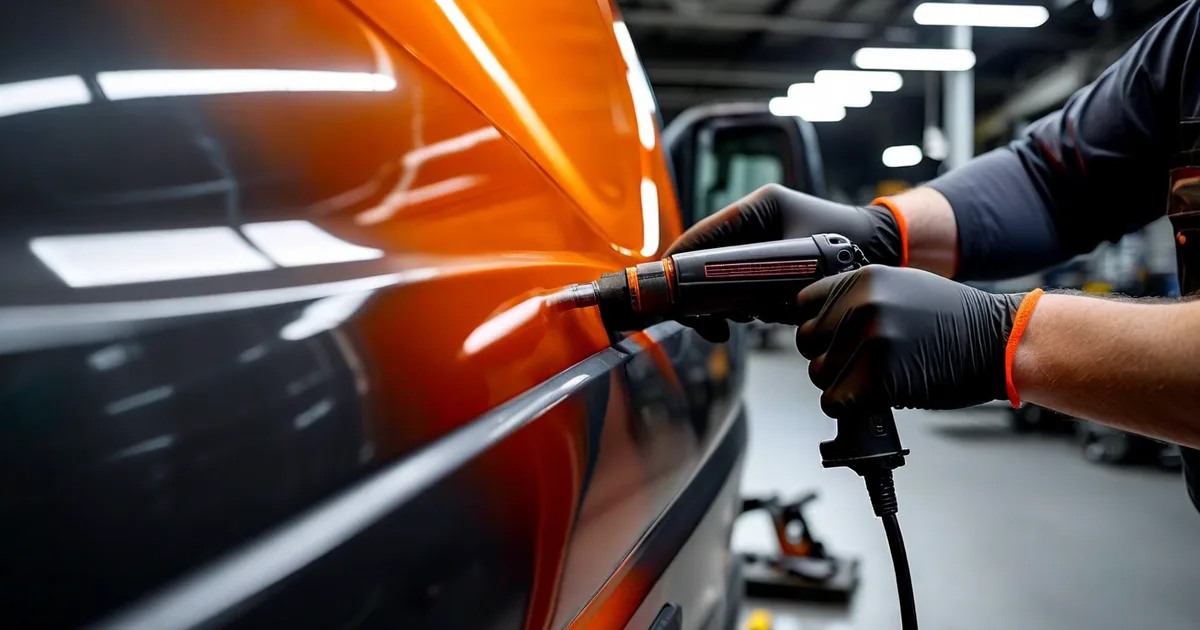
Why Vehicle Wraps Are a Game-Changer for SMBs
For small and medium-sized businesses looking to maximize their marketing budget, few strategies deliver the sheer volume of impressions that a professional vehicle wrap can. According to the Outdoor Advertising Association of America (OAAA), a single wrapped vehicle generates between 30,000 and 70,000 visual impressions per day. That’s daily exposure rivaling a billboard—without the recurring monthly rental cost.
Unlike digital ads that disappear the moment you stop paying, a vehicle wrap is a one-time investment that keeps working for you 24/7, whether your van is parked outside a client’s office, stuck in rush-hour traffic, or cruising through a commercial district.
In this guide, we’ll break down everything you need to know: realistic costs, design best practices, the installation process, and how to calculate your return on investment.
Understanding Vehicle Wrap Costs
What Influences the Price?
Vehicle wrap pricing isn’t one-size-fits-all. Several factors determine your final quote:
- Vehicle size and type – A compact car costs significantly less than a box truck or a full-size van.
- Coverage level – Full wraps, partial wraps, and spot graphics each come at different price points.
- Design complexity – A simple logo and contact information versus a full illustrative scene will affect design hours.
- Vinyl quality – Premium cast vinyl (3M 1080, Avery Dennison Supreme) lasts longer but costs more than economy calendered films.
- Installation labor – Experienced installers charge more, but the results and longevity justify the premium.
Cost Breakdown by Vehicle Type
Here’s a realistic pricing table based on 2024 market averages in Europe and North America:
| Vehicle Type | Partial Wrap | Full Wrap | Design Fees |
|---|---|---|---|
| Compact Car | $1,200 – $1,800 | $2,500 – $3,500 | $300 – $800 |
| Sedan / SUV | $1,500 – $2,200 | $3,000 – $4,500 | $400 – $1,000 |
| Standard Van | $1,800 – $2,800 | $3,500 – $5,000 | $500 – $1,200 |
| Box Truck | $2,500 – $4,000 | $5,000 – $8,000 | $600 – $1,500 |
| Fleet (5+ vehicles) | Negotiable | 10–20% volume discount | Scalable |
These figures include materials, printing, lamination, and installation. For fleet projects, most providers offer volume discounts that can bring per-unit costs down significantly.
Hidden Costs to Watch For
Beyond the headline price, keep these potential extras in mind:
- Surface preparation – If your vehicle has existing graphics, rust spots, or dents, prep work adds $200–$500.
- Removal fees – Removing an old wrap before applying a new one typically costs $500–$1,500 depending on condition.
- Warranty extensions – Some installers offer extended warranties for an additional fee.
- Design revisions – Most studios include 2–3 rounds; additional revisions may be billed hourly.
Designing a High-Impact Vehicle Wrap
The 3-Second Rule
Your wrap has roughly three seconds to communicate its message to a passing driver or pedestrian. This means your design must prioritize:
- Brand recognition – Logo prominently placed, ideally visible from multiple angles.
- Key message – What do you do? One short tagline or descriptor.
- Contact information – Phone number, website URL, or a memorable call to action.
Resist the temptation to cram every service, social media handle, and promotional offer onto the vehicle. Clutter kills readability.
Color and Contrast Best Practices
High-contrast color combinations dramatically improve readability at speed:
- Dark text on a light background (or vice versa)
- Bold, saturated brand colors rather than pastels
- Avoid placing text over complex photographic backgrounds without a solid backing panel
A helpful test: reduce your design mockup to thumbnail size on your screen. If you can still identify the brand and read the main message, your hierarchy is working.
Design File Specifications
For designers preparing wrap files, here are typical production requirements:
File Format:       Adobe Illustrator (.ai) or high-res PDF
Color Mode:        CMYK
Resolution:        Minimum 150 DPI at full scale (300 DPI preferred for close-view areas)
Bleed:             Minimum 2 inches (5 cm) on all edges for wrap-around
Outlines:          All fonts converted to outlines/curves
Layers:            Separate layers for artwork, dielines, and dimensions
Template:          Use vehicle-specific template from wrap software (e.g., Vehicle Templates Pro)
Working from accurate vehicle templates is non-negotiable. A design that looks perfect in 2D can fail catastrophically when stretched across door handles, rivets, and compound curves without proper template alignment.
Digital Integration: QR Codes and NFC
Modern vehicle wraps increasingly incorporate digital touchpoints:
- QR codes linking to landing pages, appointment schedulers, or promotional offers
- NFC tags embedded near door handles for tap-to-interact functionality at events
- Trackable URLs (e.g., yourcompany.com/van) to measure wrap-driven web traffic
At Lueur Externe, we often advise clients to create dedicated landing pages for their vehicle wrap campaigns. This allows precise tracking of how many leads originate from mobile exposure—a critical data point for calculating ROI.
The Installation Process: Step by Step
Pre-Installation Checklist
Before your vehicle arrives at the installation bay, ensure:
- The vehicle is thoroughly washed and decontaminated (clay bar treatment recommended)
- All wax, sealant, or ceramic coatings are removed from areas to be wrapped
- Dents, scratches, or rust are repaired (vinyl conforms to imperfections, it doesn’t hide them)
- Fuel tank is at most half full (reduces outgassing in warm installation environments)
- The vehicle is dry and at room temperature
Installation Timeline
A professional full wrap typically takes 2 to 5 business days, depending on complexity:
- Day 1 – Vehicle inspection, final measurements, surface decontamination
- Day 2–3 – Panel-by-panel application in a climate-controlled environment (ideally 65–75°F / 18–24°C)
- Day 4 – Post-heating, edge sealing, and quality inspection
- Day 5 – Final client walkthrough, care instruction delivery
Rush jobs are possible but not recommended. Vinyl needs time to settle, and post-heating ensures the adhesive achieves full bond strength.
What Makes a Quality Installation?
Look for these hallmarks of professional workmanship:
- No visible seams on flat panels (seams should be hidden in body lines)
- Clean tucks around edges—no lifting or bubbling
- Consistent finish across all panels (no color mismatch between printed sections)
- Proper relief cuts around rivets and complex curves
- All hardware (badges, handles, mirrors) cleanly wrapped or trimmed around
Calculating ROI: Is a Vehicle Wrap Worth It?
Cost Per Thousand Impressions (CPM)
Let’s compare the CPM of a vehicle wrap against other local advertising channels:
| Advertising Channel | Average CPM | Duration |
|---|---|---|
| Vehicle Wrap | $0.04 – $0.15 | 5–7 years |
| Local Radio | $8 – $20 | Per spot |
| Billboard (static) | $3 – $14 | Monthly rental |
| Google Local Ads | $5 – $30 | Per campaign |
| Local Newspaper | $10 – $45 | Per insertion |
| Social Media Ads | $6 – $15 | Per campaign |
The numbers speak for themselves. A $4,000 full wrap generating 50,000 impressions per day over 5 years produces roughly 91 million impressions at a CPM of approximately $0.04. No other local channel comes close to that efficiency.
Real-World Example
Consider a plumbing company operating two wrapped vans in a metropolitan area:
- Investment: $8,500 (two full wraps including design)
- Daily impressions: ~100,000 combined
- Monthly leads attributed to wraps (tracked via dedicated URL): 12–18
- Average job value: $350
- Monthly revenue from wrap leads: $4,200 – $6,300
- Payback period: Less than 2 months
Even with conservative estimates, the payback period for most service businesses is under six months.
Maintaining Your Vehicle Wrap
Do’s and Don’ts
Do:
- Hand-wash with a mild automotive soap
- Rinse with clean water and dry with a microfiber cloth
- Park in shaded areas or garages when possible
- Address any lifting edges immediately (a heat gun and roller can re-seal minor issues)
Don’t:
- Use automatic car washes with brushes
- Apply wax or polish over matte/satin wraps
- Pressure-wash at close range (keep the nozzle at least 12 inches away, below 2,000 PSI)
- Ignore bird droppings or tree sap—they can stain vinyl if left too long
When to Replace
Watch for these signs that your wrap is approaching end-of-life:
- Significant fading or color shift (especially on horizontal surfaces)
- Cracking or brittleness at edges
- Adhesive failure (bubbling, lifting that can’t be re-sealed)
- Brand refresh or updated contact information
Most businesses find that a wrap replacement every 5–6 years aligns naturally with brand refreshes and vehicle lease cycles.
Choosing the Right Wrap Partner
What to Look For
Not all wrap shops are created equal. When evaluating providers:
- Portfolio quality – Ask for examples on vehicles similar to yours.
- Certifications – 3M Preferred Installer or Avery Dennison Certified Installer status indicates training and quality standards.
- Warranty – A reputable installer backs their work with at least a 1–2 year installation warranty on top of the vinyl manufacturer’s material warranty.
- In-house design – Shops that handle both design and installation ensure seamless file-to-vehicle translation.
- Climate-controlled facility – Essential for proper adhesion and bubble-free results.
Integrating Wraps Into Your Broader Marketing Strategy
A vehicle wrap doesn’t exist in isolation. The most successful wrap campaigns are integrated with:
- A strong web presence optimized for local SEO
- Consistent branding across all touchpoints (website, social media, print materials)
- Trackable call-to-actions that feed into your CRM
This is where digital expertise meets physical branding. At Lueur Externe, our team specializes in helping businesses connect their offline visibility—like fleet branding—with online lead capture systems, SEO-optimized websites, and conversion tracking. A wrapped van driving through Nice or Cannes is powerful, but even more so when the URL on its side leads to a fast, well-designed landing page that converts visitors into customers.
Common Mistakes to Avoid
Based on years of advising SMBs on branding projects, here are the most frequent pitfalls:
- Designing without a template – This leads to misaligned graphics and text falling on seams or curves.
- Choosing the cheapest quote – Low bids often mean inferior vinyl, inexperienced installers, or both. The wrap will fail prematurely, costing more in the long run.
- Ignoring the rear of the vehicle – The rear panel is visible to every car behind you in traffic. Many businesses leave it blank or underutilized.
- Too much text – If someone needs to stop and read your vehicle, you’ve lost them. Simplify.
- No call to action – Tell people what to do: call, visit a URL, scan a code.
- Forgetting fleet consistency – If you have multiple vehicles, even slight color or layout variations look unprofessional. Use exact color codes and standardized templates.
Conclusion: Invest Smart, Drive Results
A professional vehicle wrap remains one of the highest-ROI marketing investments available to small and medium-sized businesses. With costs that often pay for themselves within months and a lifespan of 5–7 years, wraps deliver unmatched cost-per-impression efficiency while simultaneously protecting your vehicle’s resale value.
The keys to success are straightforward: invest in quality materials, work with certified installers, prioritize clarity in your design, and integrate your wrap into a broader digital marketing ecosystem.
If you’re ready to elevate your brand presence—both on the road and online—Lueur Externe can help you build a cohesive strategy that connects your fleet branding with a powerful digital presence. From web design and SEO to print coordination and conversion optimization, our team based in the Alpes-Maritimes has been helping businesses grow since 2003.
Get in touch with Lueur Externe to discuss your next vehicle wrap project and how to make every kilometer count for your brand.