
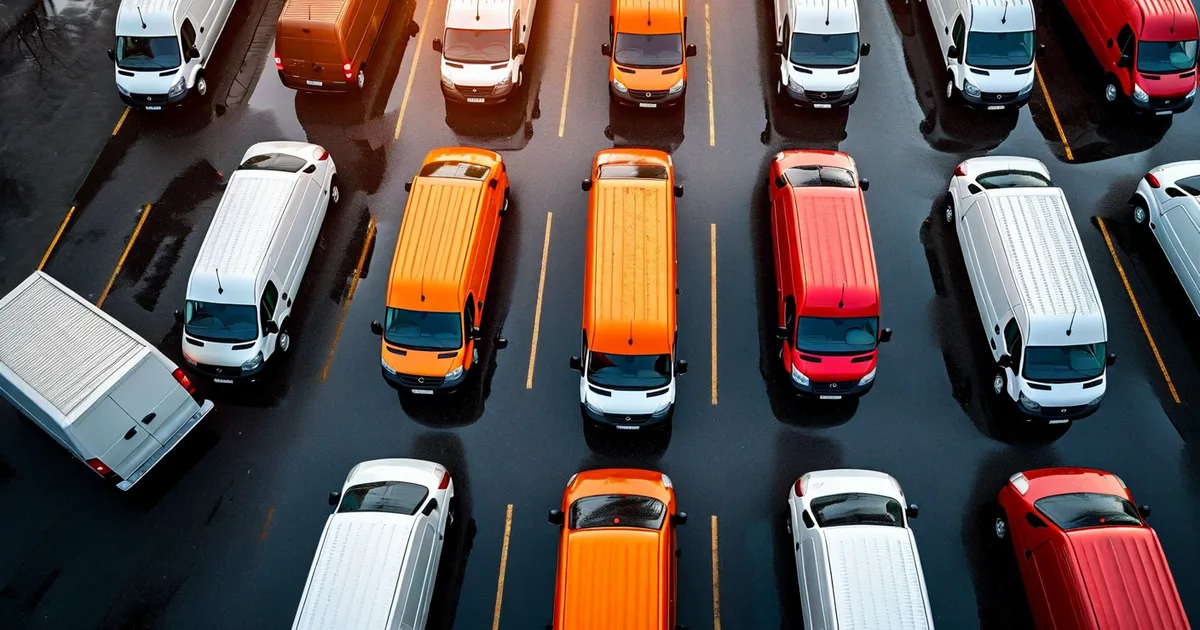
Why Vehicle Wrapping Is the Smartest Advertising Investment You’re Not Making
Every day, your company vehicles travel through neighborhoods, park in busy lots, and sit in traffic alongside thousands of potential customers. Without branding, they’re just blank canvases—missed opportunities rolling past your target audience hour after hour.
Vehicle wrapping changes that equation entirely. By transforming your fleet into mobile billboards, you create a perpetual advertising presence that works 24/7, requires no recurring media buy, and delivers some of the lowest cost-per-impression figures in the entire marketing landscape.
According to the Outdoor Advertising Association of America (OAAA), a single wrapped vehicle generates between 30,000 and 70,000 daily impressions. Over a year, that’s potentially 16 million views—from one vehicle. Now multiply that across a fleet of five, ten, or fifty vehicles, and you begin to understand why forward-thinking businesses consider vehicle wrapping not as an expense, but as an asset.
The ROI Case: Vehicle Wraps vs. Traditional Advertising
Let’s talk numbers. Businesses often struggle to justify marketing spend because ROI feels abstract. Vehicle wrapping is one of the rare channels where the math is remarkably clear.
Cost-Per-Impression Comparison
| Advertising Medium | Average CPM (Cost Per 1,000 Impressions) | Duration | Recurring Costs |
|---|---|---|---|
| Television (local) | $15 - $30 | 30 seconds | Monthly |
| Radio | $8 - $15 | 30 seconds | Monthly |
| Billboard (static) | $3 - $8 | Monthly lease | Monthly |
| Social Media Ads | $5 - $12 | Per campaign | Ongoing |
| Newspaper/Magazine | $10 - $25 | Single issue | Per insertion |
| Vehicle Wrap | $0.04 - $0.15 | 5-7 years | None |
The data speaks for itself. A full vehicle wrap costing $4,000 that generates 50,000 impressions per day over five years delivers approximately 91 million impressions at a CPM of roughly $0.04. No other medium comes close to this efficiency.
A Real-World Example
Consider a plumbing company operating five service vans in a metropolitan area. Each van is wrapped with the company’s branding, phone number, and website. At 40,000 impressions per vehicle per day, the fleet generates 200,000 daily impressions—equivalent to 73 million annual impressions. The total investment of $20,000 for five full wraps amortized over five years equals $4,000 per year, or roughly $11 per day for the entire fleet.
Compare that to a single local TV spot running once daily at $500-$1,500 per airing. The vehicle wraps deliver continuous exposure at a fraction of the cost with zero ongoing media spend.
Understanding Vehicle Wrap Types and Materials
Not all wraps are created equal. Understanding the options helps you make informed decisions based on your budget, goals, and vehicle types.
Full Wraps
A full wrap covers the entire painted surface of the vehicle, including bumpers, door handles, and sometimes windows (using perforated vinyl). This provides maximum visual impact and creates a completely unified brand presence. Full wraps are ideal for:
- Businesses wanting maximum brand visibility
- Vehicles with existing paint damage that needs concealing
- Companies with bold, graphic-heavy designs
- Fleet vehicles that serve as primary advertising channels
Partial Wraps
Partial wraps cover specific sections of the vehicle—typically the rear, sides, or hood—while leaving some of the original paint visible. They offer a balance between impact and budget:
- 50-70% of the visual impact of a full wrap
- 40-60% of the cost
- Faster installation (1-2 days vs. 3-5 days)
- Works best when the vehicle’s paint color complements the design
Spot Graphics and Decals
For businesses with tight budgets or simple branding needs, spot graphics (cut vinyl lettering and logos) provide essential brand identification without the investment of a full wrap. While less visually impactful, they’re:
- The most affordable option ($300-$1,500)
- Quick to install (hours, not days)
- Easy to update when information changes
- Professional and clean in appearance
Material Selection Matters
The vinyl industry offers two primary categories:
Cast Vinyl — Premium-grade material manufactured by casting liquid vinyl onto a sheet. It’s thinner (2 mil), more conformable to complex curves, and lasts 7-10 years. Brands like 3M 1080/2080 and Avery Dennison Supreme Wrapping Film fall into this category.
Calendered Vinyl — More affordable material created by pressing vinyl through rollers. It’s thicker (3-4 mil), less conformable, and lasts 3-5 years. Suitable for flat surfaces and short-term applications.
For fleet vehicles expected to carry wraps for years, cast vinyl is always the better investment despite the higher upfront cost.
Designing for Maximum Impact: The 3-Second Rule
A wrapped vehicle is not a brochure. Viewers see it in motion, from a distance, and for mere seconds at a time. Effective vehicle wrap design follows fundamentally different principles than print or digital design.
The 3-Second Rule
Your design must communicate three essential pieces of information within three seconds:
- Who you are (company name/logo)
- What you do (service or product category)
- How to reach you (phone number, website, or both)
Anything beyond these three elements is bonus information that should never compete with the primary message.
Design Best Practices
- Use contrast aggressively — Dark text on light backgrounds (or vice versa) ensures readability from 50+ feet away
- Limit fonts to two maximum — One for headlines, one for supporting text
- Make your phone number at least 6 inches tall — Legibility from a distance is non-negotiable
- Use the vehicle’s shape — Work with body lines, not against them
- Avoid clutter — White space (or clean space) is your friend, even on a vehicle
- Consider all angles — Design for the rear view (most common in traffic), both sides, and even the top for parking garages
Color Psychology in Fleet Branding
Color choice impacts both brand recognition and visibility on the road:
- Red/Orange — High energy, urgency, great for service businesses
- Blue — Trust, professionalism, ideal for B2B and healthcare
- Green — Eco-friendly, natural, perfect for landscaping and sustainable brands
- Black — Premium, sophisticated, works for luxury services
- Yellow — Attention-grabbing, high visibility, effective for construction and safety
At Lueur Externe, we’ve helped numerous clients bridge the gap between digital brand strategy and physical brand presence. The consistency between your online identity and your fleet branding is critical—your website, social media, and vehicles should tell a cohesive visual story.
The Installation Process: What to Expect
Understanding the installation timeline helps you plan fleet downtime and manage expectations.
Pre-Installation Phase (1-2 Weeks)
- Vehicle measurement and templating — Precise measurements or digital templates ensure the design fits perfectly
- Design creation and approval — Multiple revision rounds to finalize artwork
- Print production — Large-format printing on vinyl, followed by lamination for UV protection
- Quality inspection — Color accuracy, print quality, and material integrity checks
Installation Day(s)
- Surface preparation — Thorough cleaning with isopropyl alcohol to remove all contaminants
- Application — Skilled technicians apply vinyl panels using heat guns and squeegees
- Post-heating — Edges and curves are heat-treated to activate adhesive memory
- Final inspection — Bubble-free finish, proper edge sealing, and alignment verification
Timeline by Vehicle Type
- Sedan/Car: 2-3 days for full wrap
- SUV/Pickup Truck: 3-4 days
- Cargo Van: 3-4 days
- Box Truck: 4-5 days
- Semi-Trailer: 5-7 days
Fleet Management: Scaling Your Mobile Advertising Program
Wrapping a single vehicle is straightforward. Managing a fleet wrapping program across dozens or hundreds of vehicles requires strategic planning.
Consistency Across the Fleet
When vehicles are wrapped over time (as new ones join the fleet), maintaining design consistency becomes challenging. Color fading on older wraps, design updates, and different vehicle models all create potential inconsistency.
Best practices include:
- Document exact color codes (PMS/Pantone for print, hex for digital reference)
- Create vehicle-specific templates for each make/model in your fleet
- Establish a replacement schedule — Replace wraps proactively before they look worn
- Maintain a digital brand asset library accessible to all vendors
Tracking Wrap Performance
Unlike digital ads, vehicle wraps don’t come with built-in analytics dashboards. However, you can measure their effectiveness:
- Dedicated phone numbers — Use a unique tracking number on vehicle wraps
- Custom landing pages/URLs — “CompanyName.com/van” or similar
- QR codes — Effective when vehicles are parked (not in motion)
- “How did you hear about us?” — Train staff to ask and record responses
- Geographic analysis — Track new customer acquisition in areas where vehicles operate
A Sample Tracking Implementation
Here’s a simple approach to tracking vehicle wrap leads using UTM parameters on your dedicated URL:
https://www.yourcompany.com/fleet-offer?utm_source=vehicle_wrap&utm_medium=fleet&utm_campaign=van_01&utm_content=rear_panelBreaking this down:
utm_source=vehicle_wrap— Identifies the lead source as the wraputm_medium=fleet— Categorizes it under fleet advertisingutm_campaign=van_01— Tracks which specific vehicle generated the leadutm_content=rear_panel— Identifies which part of the wrap was referenced (if using different URLs per panel)
This data flows directly into Google Analytics, allowing you to attribute conversions to specific vehicles and even specific design elements. At Lueur Externe, we routinely integrate these tracking methodologies into broader digital marketing strategies, ensuring that offline advertising channels like fleet wraps are measured with the same rigor as online campaigns.
Maintenance and Care: Protecting Your Investment
A vehicle wrap is a significant investment. Proper maintenance extends its life and keeps it looking professional throughout its service period.
Do’s
- Wash regularly (at least bi-weekly) with mild soap and water
- Hand wash or use touchless car washes
- Address bird droppings, tree sap, and fuel spills immediately
- Park in shade or covered areas when possible
- Apply spray wax designed for vinyl wraps quarterly
Don’ts
- Never use abrasive brushes or high-pressure washers at close range
- Avoid petroleum-based solvents or harsh chemicals
- Don’t wax with carnauba or traditional automotive wax
- Never use automated car washes with brushes
- Don’t ignore small tears or lifting edges—repair immediately before they spread
Seasonal Considerations
In regions with extreme climates (similar to the varying conditions between the Mediterranean coast and the alpine areas of the Alpes-Maritimes where Lueur Externe is headquartered), wraps face unique challenges:
- Summer/UV exposure — Laminated wraps resist fading, but prolonged sun exposure still degrades materials over time. Park in shade when possible.
- Winter/Cold — Vinyl becomes less flexible in cold weather. Avoid pressure washing cold wraps, and be gentle when removing ice or snow.
- Salt and road grime — Rinse frequently during winter months to prevent chemical buildup under wrap edges.
Legal Considerations and Regulations
Before wrapping your fleet, be aware of potential legal requirements:
- Vehicle identification numbers — Ensure wraps don’t cover legally required markings (VIN plates, DOT numbers for commercial vehicles)
- Window coverage laws — Most jurisdictions regulate how much window area can be covered with perforated vinyl. Rear windows are generally acceptable; front and front-side windows typically cannot be covered
- Commercial vehicle regulations — Some municipalities require business vehicles to display certain information (company name, DOT number, USDOT for interstate commerce)
- HOA restrictions — Some homeowners’ associations restrict branded vehicles parked in residential areas
- Insurance notification — Inform your insurance company about the wrap; it may affect coverage or vehicle valuation
The Environmental Angle: Wraps vs. Paint
For environmentally conscious businesses, vehicle wraps offer several sustainability advantages over traditional paint:
- No VOC emissions — Vehicle painting releases volatile organic compounds; vinyl application does not
- Paint protection — Wraps preserve the original paint, reducing the need for repainting and associated chemical use
- Removability — When branding changes, wraps are removed cleanly rather than requiring chemical stripping and repainting
- Targeted replacement — Damaged sections can be replaced individually without redoing the entire vehicle
Integrating Vehicle Wraps Into Your Broader Marketing Strategy
Vehicle wraps shouldn’t exist in isolation. They work best as part of an integrated marketing ecosystem:
- Consistent branding — Colors, fonts, and messaging should match your website, social media, and print materials exactly
- Cross-channel reinforcement — Seeing your brand on a vehicle reinforces digital ad exposure and vice versa
- Local SEO synergy — Branded vehicles operating in specific service areas reinforce local search signals when customers search for “[service] near me”
- Social proof — A fleet of branded vehicles communicates scale and professionalism, building trust before a prospect ever visits your website
- Content creation — Document your wrap installation process for social media content; before/after reveals generate high engagement
Calculating Your Fleet Wrap Budget
Here’s a practical framework for budgeting a fleet wrap program:
| Fleet Size | Wrap Type | Cost Per Vehicle | Total Investment | Annual Cost (5-Year Life) | Estimated Daily Impressions |
|---|---|---|---|---|---|
| 3 vehicles | Full wrap | $4,000 | $12,000 | $2,400 | 120,000 |
| 5 vehicles | Full wrap | $3,800 | $19,000 | $3,800 | 200,000 |
| 10 vehicles | Full wrap | $3,500 | $35,000 | $7,000 | 400,000 |
| 10 vehicles | Partial wrap | $2,200 | $22,000 | $4,400 | 280,000 |
| 20 vehicles | Full wrap | $3,200 | $64,000 | $12,800 | 800,000 |
Note: Larger fleet orders typically qualify for volume discounts on both design and installation.
At a CPM of $0.04-$0.15, even the most conservative estimates make vehicle wrapping one of the most efficient advertising investments available to local and regional businesses.
Common Mistakes to Avoid
Learn from others’ costly errors:
- Overcrowding the design — Trying to include every service, promotion, and social media handle creates visual chaos that communicates nothing
- Using low-resolution images — Vehicle wraps are printed at large scale; images must be 300 DPI minimum at final print size
- Ignoring the vehicle’s color — If doing a partial wrap, the base paint color must work with the design
- Choosing the cheapest installer — Poor installation leads to bubbles, lifting, peeling, and premature failure that reflects badly on your brand
- Forgetting the rear view — In traffic, vehicles behind you see the rear panel most and longest
- Not planning for vehicle changes — Design templates that can adapt to new vehicle models as your fleet evolves
- Skipping the laminate — Unlaminated prints fade rapidly under UV exposure and scratch easily
Conclusion: Your Fleet Is Your Most Underutilized Marketing Channel
Every mile your unbranded vehicles travel is a missed advertising opportunity. Vehicle wrapping transforms these dormant assets into a perpetual marketing force that builds brand awareness, generates leads, and reinforces your professional image—all without recurring media costs.
The numbers don’t lie: at less than $0.15 per thousand impressions, vehicle wraps deliver ROI that digital and traditional advertising channels simply cannot match. Combined with strategic design, quality materials, professional installation, and proper tracking, your fleet becomes measurably your most efficient advertising investment.
Whether you’re wrapping a single service van or deploying a 50-vehicle fleet program, the key is integrating your physical branding with your digital presence for maximum impact. That’s where working with a partner who understands both worlds makes all the difference.
Ready to turn your fleet into a mobile advertising powerhouse? Contact Lueur Externe today. With over 20 years of expertise bridging print, digital, and brand strategy from our base in the Alpes-Maritimes, we help businesses create cohesive brand experiences that perform across every touchpoint—from the highway to the search results page.