
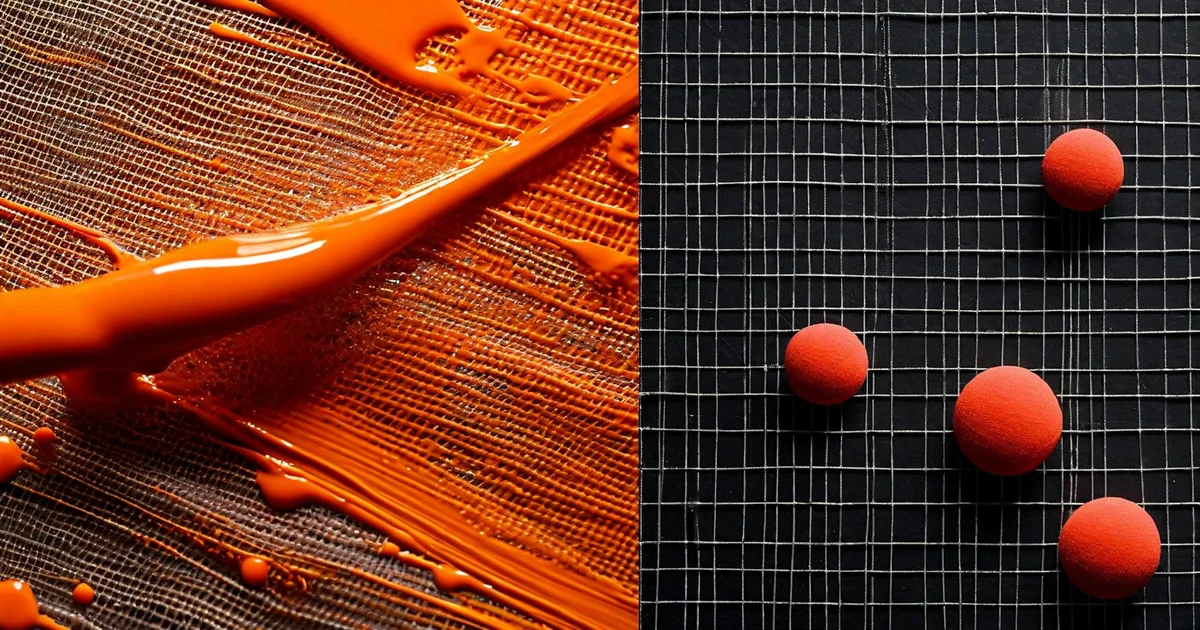
Understanding the Two Main Textile Printing Methods
Choosing between screen printing and digital printing is one of the most important decisions you’ll make when launching a custom textile project. Whether you’re building a merchandise line, outfitting a corporate team, or starting a print-on-demand e-commerce store, the printing method you select directly impacts your cost per unit, design flexibility, production timeline, and final product quality.
This guide breaks down both methods in practical detail, giving you the data and context you need to make a confident decision.
How Screen Printing Works
The Process
Screen printing (also called silk screening or serigraphy) is a centuries-old technique that pushes ink through a mesh stencil onto fabric. Here’s the simplified workflow:
- Design separation – Each color in the design is separated into an individual layer
- Screen creation – A photosensitive emulsion is applied to a mesh screen, exposed to UV light through a film positive, and washed to create the stencil
- Ink application – A squeegee forces ink through the open mesh areas onto the garment
- Curing – The printed garment passes through a conveyor dryer (typically at 320°F / 160°C for plastisol inks)
- Repeat – For multi-color designs, each color requires a separate screen and pass
Key Characteristics
- Ink types: Plastisol, water-based, discharge, specialty (metallic, puff, glow-in-the-dark)
- Color limit per design: Typically 1–8 colors (each adds cost)
- Setup time: 30 minutes to several hours depending on complexity
- Best suited for: Large runs, bold graphics, Pantone-matched colors, dark garments
How Digital Printing (DTG) Works
The Process
Direct-to-Garment (DTG) printing uses modified inkjet technology to spray water-based textile inks directly onto fabric. The process looks like this:
- Pre-treatment – A solution is applied to the garment (essential for dark fabrics) and heat-pressed
- Loading – The garment is placed on a platen and loaded into the printer
- Printing – The printer head deposits CMYK + White ink directly onto the fabric
- Curing – The print is heat-pressed or tunnel-dried to fix the ink into the fibers
Key Characteristics
- Ink types: Water-based pigment inks (CMYK + White)
- Color limit per design: Unlimited (full photographic spectrum)
- Setup time: Minutes (upload file and print)
- Best suited for: Small runs, complex multi-color artwork, photographs, print-on-demand
Head-to-Head Comparison
The following table summarizes the critical differences between both methods across the factors that matter most for production decisions:
| Factor | Screen Printing | Digital Printing (DTG) |
|---|---|---|
| Setup cost | $25–$50 per screen (per color) | None (digital file only) |
| Cost per unit (1 piece) | $25–$45+ | $8–$18 |
| Cost per unit (500 pieces) | $3–$7 | $8–$15 |
| Max colors | 8–12 (practical limit) | Unlimited |
| Print feel | Smooth to slightly raised | Soft, integrated into fabric |
| Durability (wash cycles) | 80–100+ washes | 50–80 washes |
| Production speed (per hour) | 200–1,000+ units | 15–30 units |
| Best fabric colors | All, especially dark | Light (best) / Dark (good with pre-treatment) |
| Eco-friendliness | Moderate (solvent cleanup, ink waste) | Higher (water-based, less waste) |
| Detail resolution | Good (halftones possible) | Excellent (300 DPI photographic) |
| Minimum order | 24–50 units typical | 1 unit |
Cost Analysis: Finding the Break-Even Point
The Economics of Screen Printing
Screen printing has high fixed costs and low variable costs. Every color in your design requires a separate screen, and the setup process (burning screens, mixing inks, registering colors) takes time regardless of whether you’re printing 10 or 10,000 units.
Here’s a typical cost model for a 3-color design:
- Screen setup: 3 screens × $40 = $120
- Ink and labor per unit: $2.50
- Blank garment: $3.00
For 25 units: ($120 + 25 × $5.50) / 25 = $10.30 per unit For 500 units: ($120 + 500 × $5.50) / 500 = $5.74 per unit For 2,000 units: ($120 + 2,000 × $5.50) / 2,000 = $5.56 per unit
The Economics of Digital Printing
DTG has virtually no fixed costs but higher variable costs per unit:
- Setup: $0
- Ink, pre-treatment, and labor per unit: $6.00
- Blank garment: $3.00
For 25 units: $9.00 per unit For 500 units: $9.00 per unit For 2,000 units: $9.00 per unit
The Crossover
Based on this model, screen printing becomes cheaper per unit at approximately 48 units for a 3-color design. For a single-color design (one screen at $40, lower ink costs), the crossover drops to around 25 units. For a 6-color design, it may not break even until 150+ units.
This is exactly the type of cost-benefit analysis that teams at Lueur Externe help e-commerce clients navigate when building custom product configurators or print-on-demand stores on platforms like Prestashop and WooCommerce.
Quality and Aesthetics Compared
Color Vibrancy
Screen printing wins on vibrancy for spot colors. Because you mix exact Pantone shades and lay them down in a thick, opaque layer, the results are punchy and consistent across thousands of units. This is why major brands still screen print their merchandise.
DTG excels with gradients, photographs, and designs with dozens of colors. A photorealistic portrait with skin tones, shadows, and fine detail simply cannot be reproduced economically with screen printing.
Hand Feel
Water-based screen printing and DTG both produce a soft hand feel since the ink bonds with the fibers rather than sitting on top. Plastisol screen printing creates a slightly raised, rubbery texture — some customers love it, others don’t.
Consistency
Screen printing offers near-perfect consistency across a run once the press is dialed in. DTG can show slight variations between prints due to pre-treatment application, platen alignment, and ink settling, though modern machines have significantly reduced these issues.
Durability and Wash Performance
Screen Printing Durability
- Plastisol inks: 100+ washes with minimal cracking when properly cured
- Water-based inks: 80+ washes, colors may fade slightly but never crack
- Discharge printing: Essentially permanent (removes dye and replaces it)
DTG Durability
- Light garments: 60–80 washes with gradual fading
- Dark garments (with white underbase): 40–60 washes; the white layer is the weak point
- Proper curing is critical — under-cured DTG prints fail dramatically after 5–10 washes
Environmental Impact
Screen Printing Concerns
- Plastisol inks contain PVC and phthalates (though eco-alternatives exist)
- Screen reclamation uses chemicals and water
- Ink waste from color mixing and press cleanup
- Energy-intensive curing (gas-powered conveyor dryers)
DTG Advantages
- Water-based pigment inks (typically OEKO-TEX certified)
- No screens to wash or reclaim
- Minimal ink waste (prints only what’s needed)
- Lower energy consumption per unit at small volumes
- Zero overproduction when used in print-on-demand models
For brands prioritizing sustainability, DTG combined with a print-on-demand fulfillment model virtually eliminates deadstock — a significant environmental win in the fashion industry where an estimated 30% of produced garments are never sold.
Use Case Scenarios
When to Choose Screen Printing
- Corporate merchandise — 500 polos with a 2-color logo? Screen printing delivers the lowest cost and best consistency.
- Event t-shirts — 1,000 units of a bold 3-color design for a marathon or festival.
- Streetwear brands — When you need specialty effects (puff ink, metallic, discharge) that DTG cannot replicate.
- Sports uniforms — Durability and wash resistance are paramount.
- Pantone-critical branding — When your brand guidelines demand exact color matching.
When to Choose Digital Printing
- Print-on-demand stores — No inventory risk, infinite design variations.
- Artist collaborations — Full-color illustrations or photographic artwork.
- Sampling and prototyping — Print 3 samples before committing to a full screen-printed run.
- Personalized products — Names, numbers, custom text per unit.
- Small batch limited editions — 20–30 pieces with complex designs.
Hybrid Approaches
Many successful brands use both methods strategically:
- Screen print your core bestsellers (high volume, simple designs)
- DTG print new releases and limited drops (test demand before scaling)
- Use DTG for customization options (adding customer names to a screen-printed base design)
Technical Considerations for E-Commerce Integration
If you’re selling custom printed textiles online, your printing method choice has direct implications for your e-commerce platform architecture:
Print-on-Demand (DTG-Optimized)
- Requires API integration with fulfillment partners (Printful, Gooten, SPOD)
- Real-time mockup generation
- No inventory management needed
- Higher per-unit cost but zero upfront investment
Bulk Pre-Production (Screen Print-Optimized)
- Requires inventory management system
- SKU planning for sizes/colors
- Lower per-unit cost but requires demand forecasting
- Warehouse and fulfillment logistics
At Lueur Externe, we regularly build Prestashop and WooCommerce stores that integrate both models — connecting print-on-demand APIs for new designs while managing traditional inventory for proven bestsellers. This hybrid approach maximizes margin while minimizing risk.
File Preparation Guidelines
Regardless of which method you choose, proper file preparation prevents production issues:
For Screen Printing
- Supply vector files (AI, EPS, SVG) whenever possible
- Separate colors into individual layers
- Specify Pantone references for each color
- Minimum line weight: 0.5pt (positive) / 1pt (negative/reversed)
- Resolution for halftones: 300 DPI at actual print size
For DTG Printing
- Supply high-resolution raster files (PNG with transparency preferred)
- Minimum 300 DPI at actual print size
- sRGB color space (not CMYK — DTG RIPs handle conversion)
- Transparent background (no white box around artwork)
- Maximum print area varies by machine (typically 14” × 16” / 35 × 40 cm)
The Future of Textile Printing
The industry is evolving rapidly. Here are trends to watch:
- DTF (Direct-to-Film) — A newer method that prints onto a transfer film, then heat-applies to garments. Combines some benefits of both screen and digital: no pre-treatment needed, works on all fabric colors, moderate cost at medium volumes.
- Hybrid presses — Machines that combine rotary screen units with digital inkjet heads for high-speed, full-color production.
- AI-powered design — Generative tools creating print-ready artwork in seconds, accelerating the need for on-demand production capabilities.
- Sustainable inks — Algae-based, bio-pigment, and waterless printing technologies reducing environmental impact.
Making Your Decision: A Quick Framework
Ask yourself these five questions:
- How many units do I need? Under 50 → DTG. Over 200 → Screen. In between → compare quotes.
- How many colors are in my design? 1–3 solid colors → Screen. Full-color/photographic → DTG.
- What color are the garments? Dark fabrics favor screen printing for maximum vibrancy.
- Do I need special effects? Metallic, puff, discharge, glow → Screen only.
- Is this a test or a proven seller? Testing → DTG. Proven → Screen for margin optimization.
Conclusion: Choose the Right Method for Your Business Goals
There is no universally “better” printing method — only the right method for your specific project requirements. Screen printing remains the gold standard for high-volume, bold, durable prints on any garment color. Digital printing (DTG) democratizes custom textile production by eliminating minimums and enabling photographic complexity.
The smartest operators in the custom textile space use both methods strategically, matching each order to the most cost-effective and quality-appropriate technology.
If you’re building or scaling a custom textile e-commerce business, the technical decisions don’t stop at choosing a printing method. Your online store needs to handle product configurators, real-time mockups, inventory sync, and fulfillment integrations seamlessly. That’s where working with a specialized web agency makes the difference.
Lueur Externe has been helping e-commerce businesses architect robust, scalable online stores since 2003 — from Prestashop customization to WooCommerce builds with print-on-demand API integrations. If you need expert guidance on bringing your custom textile project online, get in touch with our team today.